29th May 2026
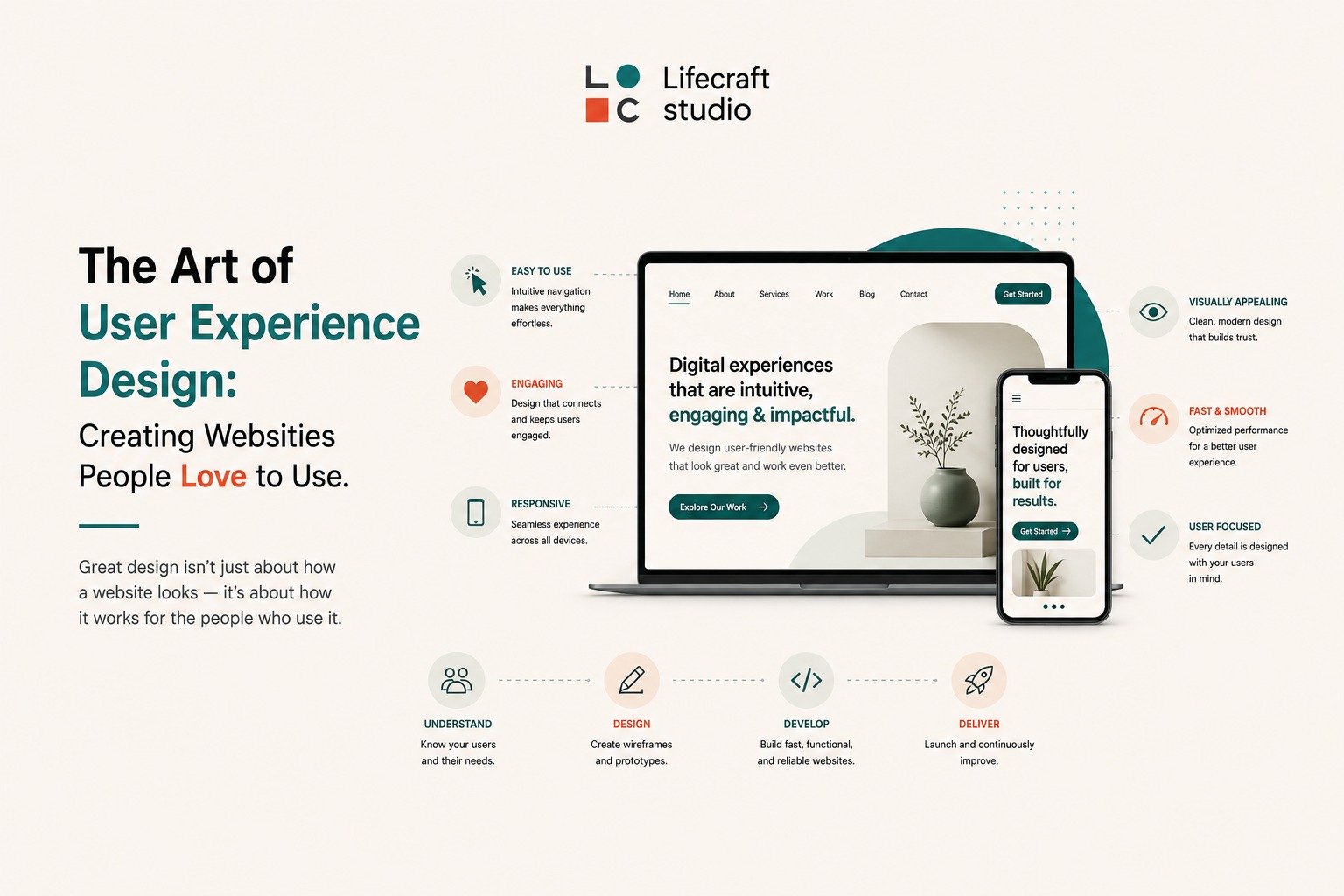
The Art Of User Experience Design - Creating Websites People Love To Use
Great user experience design is invisible; it's the smooth, effortless interaction that makes visitors feel like your website was built specifically for them. When UX works, nobody notices. When it doesn't work, everybody complains.
Why User Experience MattersUser Experience (UX) design is about understanding how people interact with websites, applications, and digital products. It focuses on creating meaningful, enjoyable, and efficient experiences that meet users' needs. Good UX design improves customer satisfaction, increases conversions, reduces bounce rates, and strengthens brand perception.
Visitors form opinions about a website within seconds. If navigation is confusing, pages load slowly, or information is difficult to find, users are likely to leave and look elsewhere. A positive user experience keeps visitors engaged and encourages them to return.
Understanding Your Users' Mental ModelsEvery visitor arrives at your website with expectations based on their previous experiences. Smart UX designers tap into these mental models rather than fighting against them. If people expect your logo to link to your homepage, don't make it do something else. If they're used to finding contact information in the header or footer, that's where it should live.
The Power of Simplicity Complexity is easy; anyone can add more features, more options, and more information. Simplicity requires discipline and deep understanding of what truly matters to your users. Every element on your page should serve a specific purpose. If it doesn't help users accomplish their goals, it's creating unnecessary friction.
Mobile-First ThinkingWith over 58% of website traffic coming from mobile devices, designing for mobile isn't optional anymore - it's essential. Mobile-first design forces you to prioritize the most important elements and create focused, streamlined experiences that work beautifully regardless of screen size.
Testing and IterationThe best UX designers know they can't predict how users will behave - they have to observe and learn. Regular user testing reveals the gap between what you think is intuitive and what actually works for real people. Small improvements based on user feedback can dramatically increase conversion rates and customer satisfaction.
Website Speed and Performance MatterEven the most visually appealing website can fail if it loads slowly. Research consistently shows that users expect fast-loading pages and are likely to abandon websites that take too long to load.
Optimizing images, reducing unnecessary code, improving server performance, and leveraging caching techniques can significantly improve website speed. Faster websites enhance user satisfaction and contribute to better search engine rankings.
Building Trust Through DesignTrust is a fundamental component of user experience. Visitors are more likely to engage with websites that appear professional, secure, and credible. Elements such as customer testimonials, reviews, security badges, transparent policies, and consistent branding help establish trust.
A trustworthy website reassures visitors and encourages them to take meaningful actions without hesitation.
Measuring UX SuccessEffective UX design should be supported by data. Metrics such as bounce rate, session duration, conversion rate, task completion rate, and customer satisfaction scores provide valuable insights into user behavior.
By analyzing these metrics, businesses can identify strengths and weaknesses within their digital experiences and make informed improvements that drive better results.
ConclusionUser experience design is about creating digital experiences that feel effortless, intuitive, and enjoyable. By understanding user behavior, embracing simplicity, prioritizing mobile experiences, improving accessibility, and continuously testing designs, businesses can create websites that people genuinely enjoy using.
The best websites are not necessarily the most visually complex; they are the ones that help users achieve their goals quickly and efficiently. When user needs are placed at the center of every design decision, businesses can build stronger relationships, improve customer satisfaction, and achieve long-term digital success.
Frequently Asked Questions (FAQs) 1. What is User Experience (UX) Design?UX design is the process of creating products and websites that provide meaningful, efficient, and enjoyable experiences for users.
2. What is the difference between UX and UI design?UX focuses on the overall user experience and functionality, while UI (User Interface) design focuses on the visual appearance and interactive elements of a product.
3. Why is UX design important for websites?Good UX design improves usability, increases customer satisfaction, boosts conversions, and helps businesses achieve their goals more effectively.
4. What is mobile-first design?Mobile-first design is an approach that prioritizes designing for mobile devices before adapting layouts for larger screens.
Follow us on


Other featured blogs

The Psychology Behind Great Graphic Design - What Makes Visuals Stick?

Digital Marketing for Small Businesses - Your Roadmap to Online Success

Building a Brand That Resonates - More Than Just a Pretty Logo

The Art of User Experience Design - Creating Websites People Love to Use